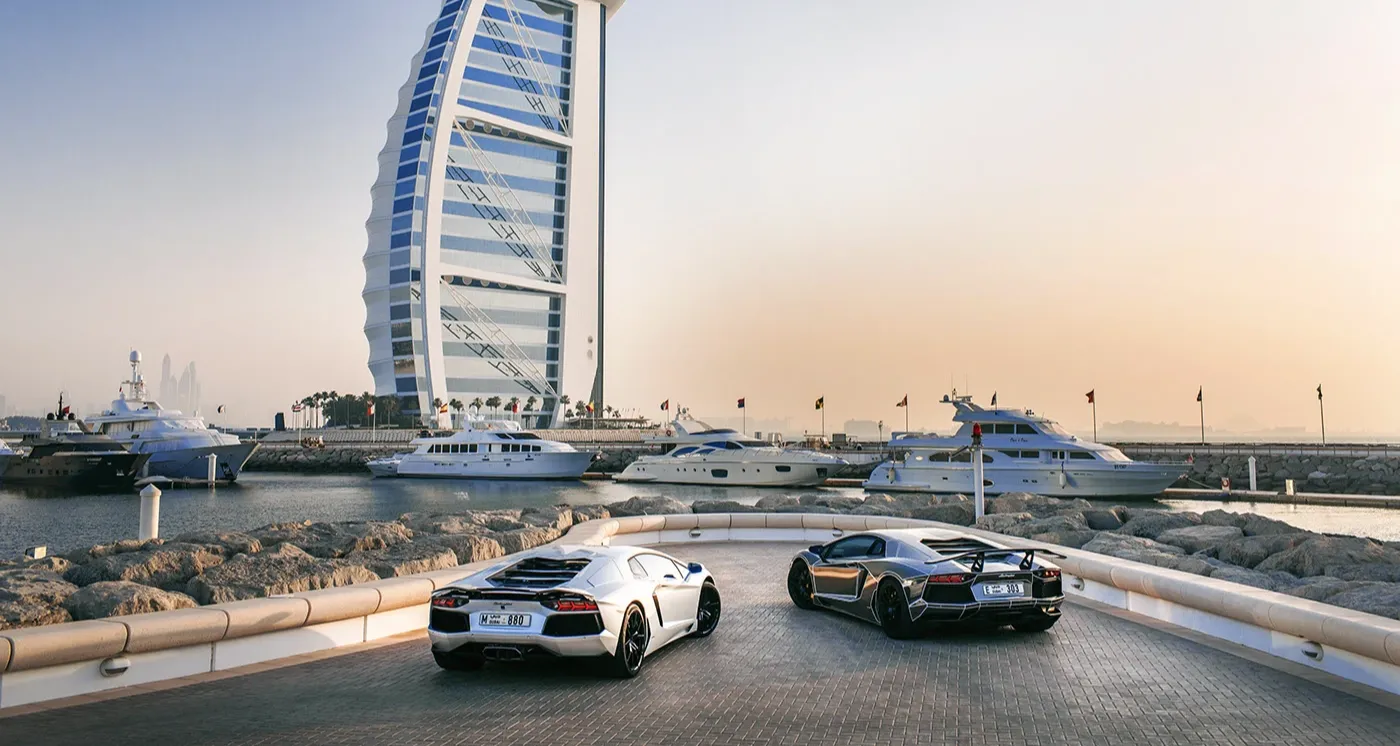
History of the UAE Automotive Market
The automotive market of the United Arab Emirates is closely connected with the country's economic development, urban expansion and investment in infrastructure. During the second half of the twentieth century, cars gradually became an important part of everyday life in the UAE. As cities grew, roads improved and international trade expanded, the number and variety of vehicles available to residents increased significantly. Dubai became one of the clearest examples of this transformation, developing into a major business, tourism and transportation hub.
In the early stages of the UAE's development, the automotive infrastructure was considerably smaller than it is today. Main roads connected growing communities, while vehicle buyers relied largely on a relatively limited number of dealerships and importers. As household incomes increased and international businesses established a stronger presence in the country, more global automotive brands entered the market. Official dealerships, service centers and independent automotive businesses gradually became an established part of the local economy.
Dubai played a particularly important role in this process. The city expanded rapidly, with new residential communities, commercial districts, airports and tourist destinations changing the way people moved around the emirate. For many residents, owning a car became a practical necessity rather than simply a matter of convenience. Long distances between different parts of the city, a hot climate and an extensive road network all contributed to the importance of private transportation.
At the same time, a market for used vehicles began to develop. Residents regularly changed cars, while businesses and expatriates entered and left the country, creating a constant flow of vehicles onto the secondary market. Used-car dealerships and independent sellers became important sources for buyers looking for different price levels, models and specifications. Today, the UAE's used-car market includes everything from practical everyday vehicles to luxury cars, sports models and rare specifications.
Car rental became another important part of the automotive landscape. Dubai's growing international tourism industry created steady demand for temporary transportation. Visitors often wanted the flexibility of having a vehicle without committing to ownership. Short-term rental companies expanded to serve tourists, while longer rental arrangements became increasingly relevant to residents, professionals and businesses.
The way people searched for vehicles also changed over time. Traditionally, buyers could find cars through dealerships, newspaper advertisements, personal contacts and specialized automotive businesses. The arrival of the internet introduced a different model. Online classifieds allowed people to view numerous vehicles remotely, compare asking prices and contact sellers without visiting several locations first.
One of the notable platforms in this transition was Dubizzle, which launched in the UAE in 2005. It started as a broader online classifieds service and gradually developed a substantial automotive category. This model changed the initial stage of vehicle shopping by allowing buyers to review photographs, specifications, locations and asking prices before arranging a physical inspection or meeting with a seller.
Digital tools did not replace traditional automotive businesses, however. Official dealerships remained important for new vehicles, warranties and manufacturer-backed services. Independent showrooms continued to serve the used-car market, while rental companies provided short- and long-term mobility solutions. Instead, online platforms became another layer connecting buyers, sellers and businesses.
The growth of the secondary market also increased the importance of vehicle inspection and history checks. Buyers became more accustomed to researching mileage, maintenance records, accident history and vehicle identification numbers before completing a transaction. Digital access to information made it easier to compare several vehicles before deciding which ones were worth inspecting in person.
The development of roads and transport infrastructure also shaped consumer preferences. Dubai's extensive highway network made it possible to travel efficiently between different parts of the city and to neighboring emirates. This encouraged demand for a broad range of vehicle types, from compact cars suitable for urban use to large SUVs and premium vehicles designed for longer journeys.
Today, the UAE automotive market combines several mature segments. New vehicles are sold through official dealer networks, used cars are offered by private owners and specialized businesses, rental companies provide temporary access to vehicles, and online marketplaces help users discover and compare available options. New mobility services, electric vehicles and digital automotive tools are adding further variety to the market.
The history of the UAE automotive market therefore reflects the broader transformation of the country itself. In only a few decades, the UAE developed from a relatively small automotive environment into a diverse market serving residents, businesses and international visitors. The market continues to evolve as digital services become more common, vehicle technology changes and consumer expectations develop. Despite these changes, the automobile remains an important part of everyday mobility in Dubai and across the Emirates.